
Mahabharata Shanti Parva – मा च ते निघ्नतः शत्रून मन्युर भवतु भारत

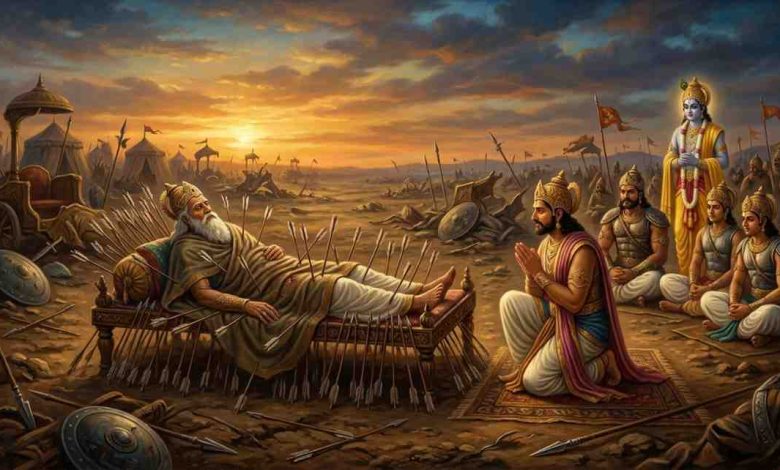
Shloka (श्लोक)
मा च ते निघ्नतः शत्रून मन्युर भवतु भारत
न तत्र किल्बिषं किं चित कर्तुं भवति भारत
⚡ Quick Meaning
Do not let anger towards the enemy arise, O Bharata; there is no sin in killing the enemy.
Translations
English Translation
This shloka suggests that one should not harbor anger against enemies and emphasizes that there is no sin in killing your foes if it is necessary for righteousness. It highlights the importance of duty over personal emotions in the context of warfare.
हिंदी अनुवाद
यह श्लोक कहता है कि शत्रुओं के प्रति क्रोध नहीं करना चाहिए और यह बताता है कि यदि यह धर्म के लिए आवश्यक है, तो शत्रुओं को मारने में कोई पाप नहीं है। यह युद्ध के संदर्भ में कर्तव्य को व्यक्तिगत भावनाओं पर प्राथमिकता देने के महत्व को उजागर करता है।
Commentary
Context
This shloka comes from the Shanti Parva of the Mahabharata, which discusses the moral and ethical dilemmas faced by warriors in battle, particularly Arjuna.
Meaning
The essence of this teaching is to emphasize the need for maintaining clarity of duty in the face of personal emotions, especially during conflict.
Application
This can be applied in various aspects of life, suggesting that in challenging situations, one should act according to their duties rather than being swayed by emotions.

