
Mahabharata Shanti Parva – न तु यॊगम ऋते शक्या पराप्तुं सा परमा गतिः

Shloka (श्लोक)
न तु यॊगम ऋते शक्या पराप्तुं सा परमा गतिः
अवबन्धॊ हि मुक्तस्य कर्मभिर नॊपपद्यते
⚡ Quick Meaning
Without yoga, one cannot attain the supreme state of liberation, as the binding of a liberated soul does not arise from actions.
Translations
English Translation
This verse emphasizes that liberation is unattainable without the practice of yoga. A liberated individual remains untouched by their actions, and the existential bindings that usually bind a soul do not apply to them. Thus, yoga acts as a crucial vehicle towards achieving the ultimate state.
हिंदी अनुवाद
यह श्लोक यह स्पष्ट करता है कि योग के बिना मुक्ति हासिल नहीं की जा सकती। एक मुक्त आत्मा अपने कर्मों से अछूती रहती है, और सामान्य अंदरुनी बंधनों का उस पर कोई प्रभाव नहीं होता। इस प्रकार, योग अंतिम अवस्था प्राप्त करने के लिए एक महत्वपूर्ण साधन है।
Commentary
Context
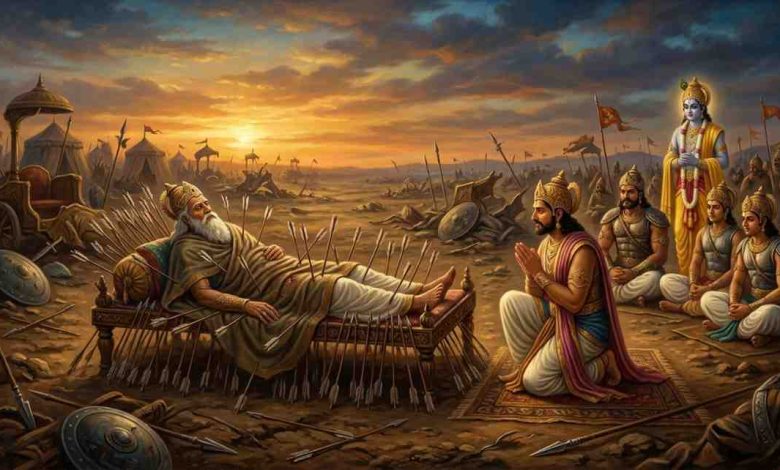
This verse is taken from the Shanti Parva of the Mahabharata, where the dialogue revolves around the nature of liberation and the role of yoga.
Meaning
The essence of the shloka lies in understanding that true liberation is intertwined with the practice of yoga, which transcends worldly attachments.
Application
In practical life, engaging deeply in yoga can help individuals overcome their attachments and experiences, leading them toward spiritual liberation.

