
Mahabharata Drona Parva – ताव अक्षतौ परमुदितौ दध्मतुर वारिजॊत्तमौ

Shloka (श्लोक)
ताव अक्षतौ परमुदितौ दध्मतुर वारिजॊत्तमौ
दृष्ट्वा परमुदितान पार्थांस तवदीया वयथिताभवन
⚡ Quick Meaning
Seeing the two mighty warriors, the sons of Pritha (Kunti), filled with delight and concern arose in Drona’s heart.
Translations
English Translation
As the two sons of Kunti, Arjuna and Bhima, stood invincible and joyful, Dronacharya witnessed their spirit. However, upon seeing them, he felt an overwhelming sense of worry for his own sons, who were in dire straits amidst the battle.
हिंदी अनुवाद
जब कर्ण और भीमा, जिन्हें कोई पराजित नहीं कर सकता, आनंदित होकर खड़े हुए, तब द्रोणाचार्य ने उनके उत्साह का दृश्य देखा। परंतु, उन्हें अपनी पुत्रों की चिंता हुई, जो युद्ध के मध्य कठिन परिस्थिति में थे।
Commentary
Context
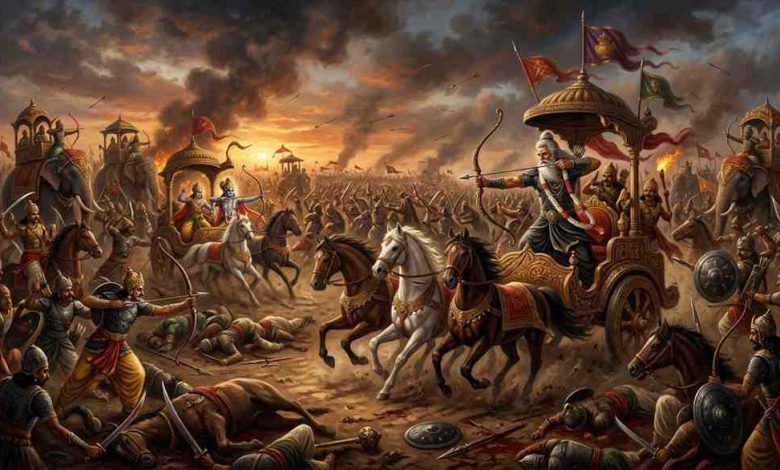
This shloka occurs in the Drona Parva, where Drona observes the changing tide of the battlefield and reflects on his emotions linked to his students and sons.
Meaning
Dronacharya’s delight in the prowess of his students is overshadowed by the pain for his own sons caught in struggle. This reflects the duality of a teacher’s love.
Application
This shloka exemplifies the emotional conflicts that leaders face, balancing pride for their followers with concern for their loved ones. It’s a reminder of the human experience amidst duty.

