
Mahabharata Karna Parva – एष ते लक्षणॊद्देशः समुद्दिष्टॊ यथाविधि

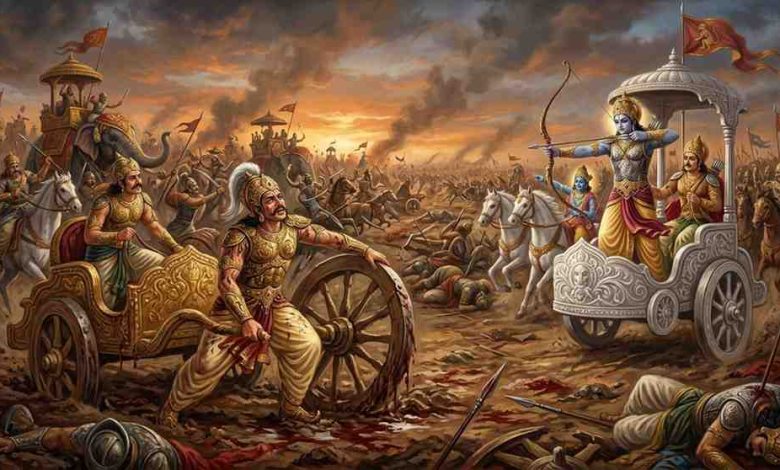
Shloka (श्लोक)
एष ते लक्षणॊद्देशः समुद्दिष्टॊ यथाविधि
एतच छरुत्वा बरूहि पार्थ यदि वध्यॊ युधिष्ठिरः
⚡ Quick Meaning
This shloka describes the characteristics that define the nature of a virtuous act, urging Arjuna to address Yudhishthira accordingly.
Translations
English Translation
It conveys that here is the definition of virtuous characteristics that has been articulated properly. After hearing this, Arjuna should communicate with Yudhishthira as instructed.
हिंदी अनुवाद
यह बताता है कि यहाँ सच्चाई और गुणों की परिभाषा दी गई है। इसे सुनने के बाद, अर्जुन को युधिष्ठिर से निर्देशित तरीके से बात करनी चाहिए।
Commentary
Context
This verse captures the ongoing strategy in the Karna Parva, emphasizing the need for communication and moral conventions during the battle.
Meaning
It signifies the importance of adhering to predetermined virtues in dialogues, especially in a context of war or conflict.
Application
In everyday life, individuals can learn to express thoughts or decisions in accordance with established virtues, enhancing clarity in communication.

